
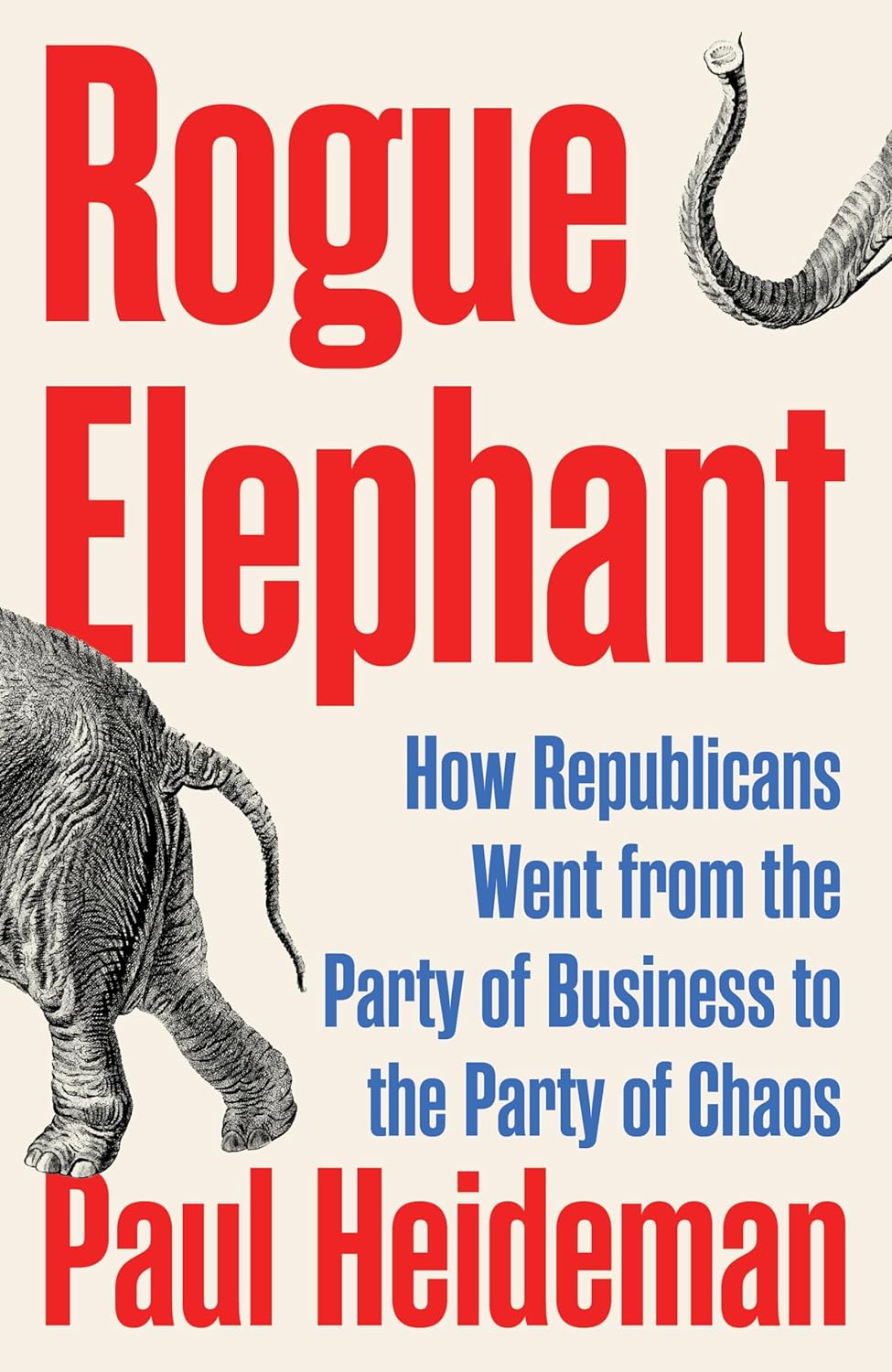
A Wild Ride Through Modern Political History
American politics has never lacked for drama, but Paul Heideman’s Rogue Elephant takes readers on a particularly fascinating journey through the Republican Party’s transformation—from the buttoned-down “party of business” to the unpredictable, populist-driven force it has become today. Heideman writes with both sharp insight and historical depth, tracing how decades of internal tension, shifting voter coalitions, and cultural upheaval turned the GOP into what he aptly calls a “rogue elephant.” The result is a book that’s equal parts political history and social analysis, delivered with energy, wit, and an eye for revealing detail.
From Boardrooms to Culture Wars
At the heart of Rogue Elephant is the story of a party that lost its center of gravity. Heideman begins in the postwar era, when the GOP largely represented the interests of corporate America—stable, cautious, and pragmatic. But as economic discontent and cultural divides grew in the latter half of the twentieth century, those priorities began to fracture. The author connects the dots from Barry Goldwater’s conservative insurgency to Reagan’s coalition of business and evangelicals, and finally to the rise of populist politics that came to dominate the 2010s. Each chapter builds toward a clear picture: the Republican Party’s current turbulence isn’t an accident—it’s the culmination of decades of unresolved contradictions.
A Thoughtful and Engaging Analysis
What makes Heideman’s approach stand out is his balance between academic rigor and readability. He writes like a historian who knows his facts cold but explains them like a storyteller who wants you to understand why they matter. The book never feels bogged down in jargon or data, even as it draws on political theory and detailed case studies. Instead, Heideman keeps his focus on the human and institutional forces that shaped the GOP’s evolution—party leaders, grassroots activists, business elites, and the voters who pulled them in new directions. It’s a complex story told with clarity and conviction.
Relevance and Reflection
Reading Rogue Elephant feels especially timely in an era when American politics often seems to teeter on the edge of chaos. Heideman doesn’t sensationalize or scold; instead, he invites readers to look beneath the surface of partisan battles and understand the deeper structural changes at work. His argument—that the Republican Party’s embrace of populism and culture-war politics represents both a rejection and fulfillment of its earlier business-oriented roots—rings with nuance and insight. Even readers who don’t share his political leanings will find his explanations persuasive and his analysis remarkably even-handed.
Final Thoughts
Rogue Elephant is a smart, engaging, and essential read for anyone trying to make sense of the Republican Party’s current identity crisis. Paul Heideman has written more than just a history of a political party—he’s offered a roadmap to understanding how power, ideology, and populism collide in modern America. With crisp writing and a gift for connecting the dots, he shows how the “party of business” became something far more unpredictable. It’s a thoughtful and absorbing work that manages to be both intellectually satisfying and genuinely enjoyable to read.




Leave a Reply